







Silly Raccoon Studios

Reading options

Scratch to remember. Black out to protect.

Join the Discord

PC (Windows) · Coming soon on Steam

Scratch or black out

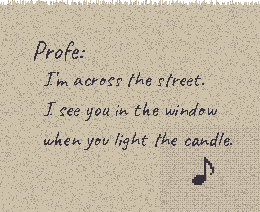
On the first night of the state of siege, someone slips a note under Ilse’s door.

Scratch off the ink.

A pencil note: “I’m across the street,” two lines blacked out in ink, and an eighth note for a signature.

With the keyboard: Enter or Space scratches off a line.

The story

Vesk, February 1961. Third year of the Northern War. After an act of sabotage at the docks, the Occupation Administration declares a ten-day state of siege: curfew, blackouts and raids, house by house.

Ilse Maar, a language teacher the Occupation fired from School Six, is locked in her apartment with the papers of her younger brother, who crossed the strait fifteen months ago. No one knows if he made it. Songbooks, letters, photographs. Almost everything is blacked out, and Ilse doesn’t remember doing it.

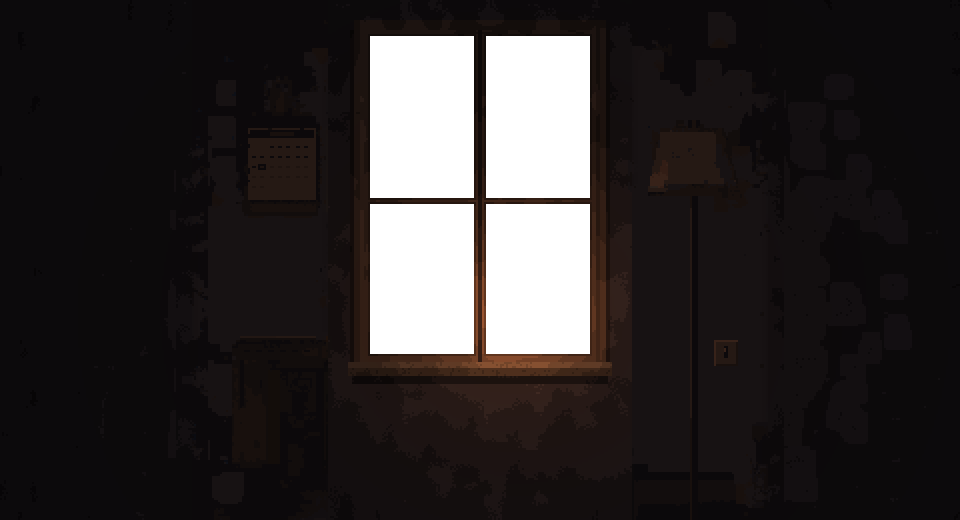
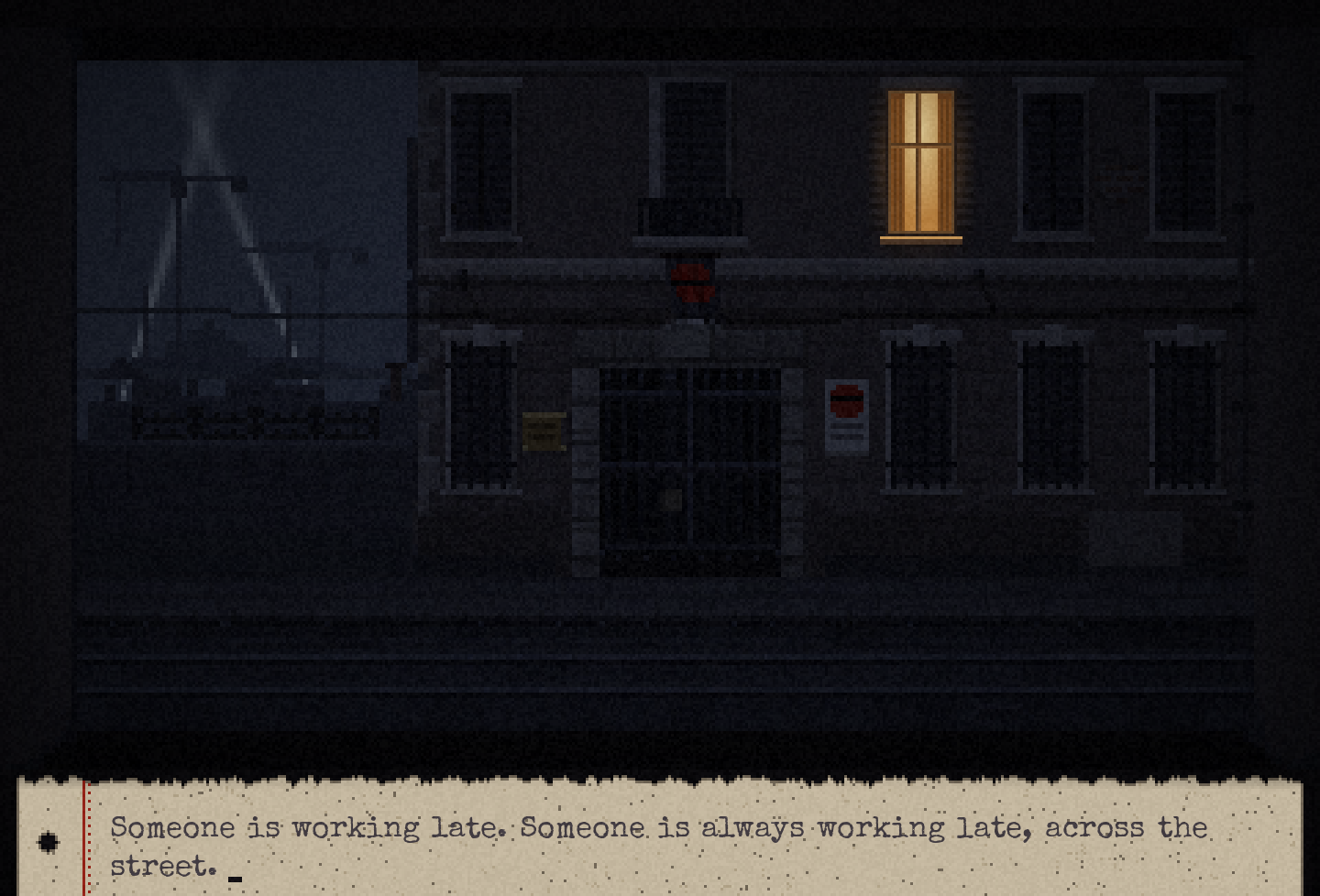
The street at night seen from Ilse’s window: across the way, the Archive, a dark stone building.

How to play

  1. Scratch or black out

    Scratch off the ink and the words come back in pieces, and with them, if you read them right, Ilse’s memories. But every name left legible is one more name the raids can find. Black a word out and you protect someone, but Ilse forgets it too. For good.

  2. One candle

    At nine, Ilse lights a candle in the window, for her brother. Putting it out is a choice too: someone is watching from across the street.

  3. Correct

    In your own handwriting you can change a paper: a time, a number. You save someone, but what you write can’t be erased.

  4. Every choice stays

    What you say, who you say it to and what you leave legible decide how it ends.

Characters

Vesk, 1961

Vesk is a northern port that never existed: gray stone, slate roofs and the wind off the strait. The war is far away. The Occupation is on the stairs.

  1. 1958The Northern War breaks out between two blocs. No one in Vesk quite understands why; the radio calls it “the defense of civilization.”
  2. Spring 1959Vesk is neutral, but it has the strait. It is occupied in four days, and the fleet never makes it out of the dock.
  3. 1959–1961The Occupation Administration takes over. Here, the war is the blackout siren, the ration card and fear.
  4. February 13, 1961An act of sabotage at the docks puts the patrol boats out of service until Friday.
  5. February 14, 1961A ten-day state of siege begins. So does the game.
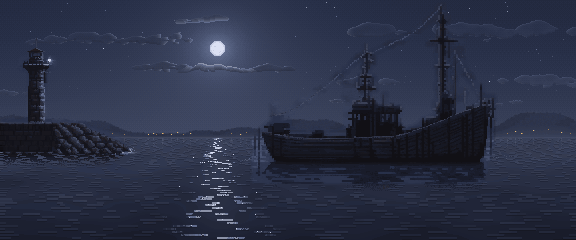
The strait at night: a fishing boat lying still under the moon, the far shore with distant lights and, on the left, a watchtower on the breakwater, its searchlight sweeping the water.

The strait

A cold arm of the sea. Across it lies the other shore, a neutral country. Crossing at night in a fishing boat is the only way out, and searchlights sweep the strait looking for boats.

“To go to the other shore”: to flee or, sometimes, to die.

The Mothers of the Candles

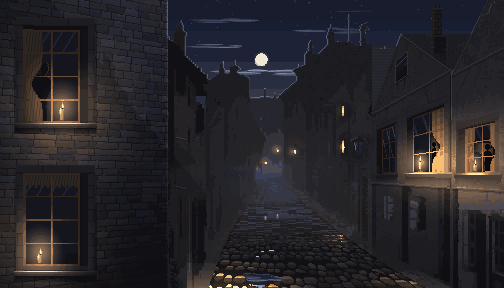
Women searching for their “transferred” children. Every Wednesday at nine at night, each of them lights a candle in her window. “So they know we’re waiting for them. Wherever they are.”

A wet cobbled street at night, misty, under the moon: a candle burns in four of its windows, and behind the curtains the mothers look out.

The Office

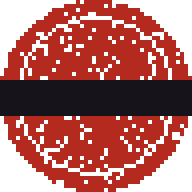
The Occupation Administration runs the city. Its police force is the Office: men in gray coats, “the men in gray.” Its seal is a red circle crossed by a black bar. Whatever they don’t like in a letter, they cover with black bars: everyone in Vesk knows how to read around a blacked-out line: the names are still underneath.

The Office saysIt means
TransferredDisappeared
The ArchiveInterrogation center
SearchRaid
CooperateInform on someone
Elements from the other shoreAnyone who thinks differently
Safe-conductA reward for those who cooperate
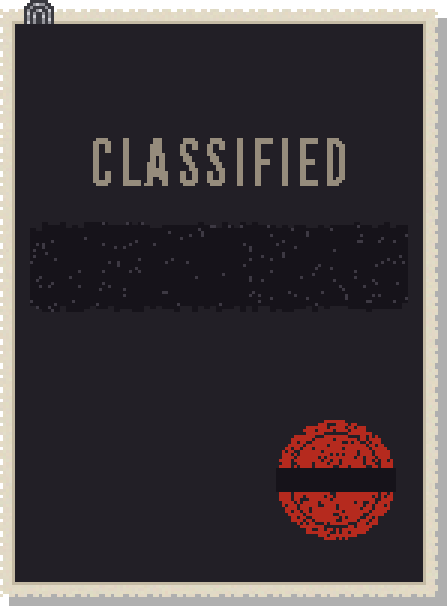
  • The notice pasted on every street corner on February 14.
  • The Administration’s motto, on every official wall. On some of them, someone has scraped “Silence” off with a fingernail.
  • One of the letters Mira signed as “a mother.” It came back like this.
  • Ilse’s ration card: what’s left of February.
  • For moving about during the curfew. The name doesn’t matter.
  • The wanted list the radio reads out between marches.
  • The mail still arrives. It just arrives already read.
  • Ten occupation crowns. Nobody trusts them.
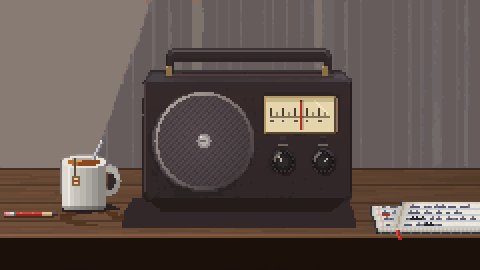
Ilse’s radio on the table in the morning, with a cup of tea, the red pencil and the notebook.

Radio Vesk

…Radio Vesk. Communiqué number forty-seven of the Occupation Administration. In the wake of the cowardly sabotage perpetrated last night at the docks… a state of siege is hereby declared in the city of Vesk for a period of ten days. The patrol boats, damaged by certain elements, will return to service on Friday. The blackout and curfew remain in force from twenty hundred hours. On Thursday, the Office will search the buildings on Aldern Street, house by house. The population is reminded that any elements captured in the strait remain at the disposal of the Office. The population is asked for its full cooperation. Order. Work. Silence.

Blacked Out is a work of fiction. Vesk and the Northern War are invented; no real country, army or symbol appears. It is inspired by the occupied cities of the twentieth century.

Questions

What is Blacked Out?

A psychological thriller visual novel. Ilse has to decide what to remember and what to black out in her brother’s papers before they search her building.

How long is it?

About two hours. It’s a complete story, with four endings.

Are there jump scares?

A few, used sparingly. Most of the fear lies in what you hear on the stairs, what you see from the window and what you choose to forget.

What does it deal with?

Military occupation, disappearances, interrogations and censorship. Violence is never shown, only implied.